March has so far, as usual, been unsettled as to weather…and I’ve been feeling a bit unsettled myself. I’ve been writing a lot of drafts, which is a good thing–productivity–and full of ideas that I’m not taking a lot of action on at the moment. I need to feel a bit more settled in my mind and physical self before I can really get going on the garden, travel, revising work, all the rest. The ides of March passed just yesterday, St, Patrick’s Day is tomorrow; and no, I will not be planting peas on St. Patrick’s Day.
In fact, I’ve no idea what the garden will be like this year. I’ve sketched out a plan, but that doesn’t mean I will stick to it. I will be traveling to see loved ones in spring, and this year’s long cold winter has changed the “usual” (whatever that is in this time of climate weirdness) progression of the vegetable patch prep. So, who can tell?
Here’s something I drafted two weeks ago. A seasonal poem with a hint of frustration and a little relief:
Late February
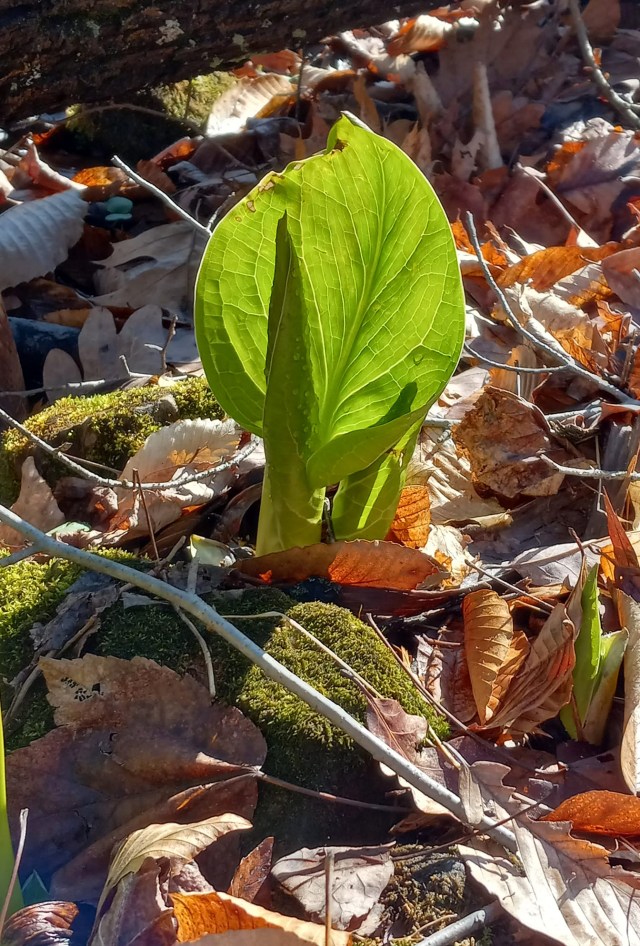
And I’m awaiting the buzzards’ return. Each year they migrate just two or three months then reappear on their snag perches and on updrafts, wings outstretched to embrace the sky. I can’t say I miss them in winter yet am glad of their return which signals a tiny season one wedge in winter’s grip that says it is just warm enough for decay’s odors to reach turkey vultures’ nasal cavities. Soon there will be skunk cabbage and skunks will awaken. Here, spring commences with leaf-mold stink and buzzards. Reader, try to be grateful.
My trip to Baltimore for the AWP Conference Book Fair didn’t happen; my immune system decided otherwise, with a resurgence of a nasty respiratory virus and a flare of fibromyalgia. I guess I can look on the positive side and say I saved a lot of money, right? Plus I can purchase most of those poetry collections online, I suppose. Still, there really is nothing like browsing through thousands of luscious books for something that grabs me, that takes the top of my head off, to paraphrase Ms. Dickinson. Through social media platforms, I can see colleagues-in-literature making connections and meeting one another face-to-face, which is what conferences are for. Another year, maybe.
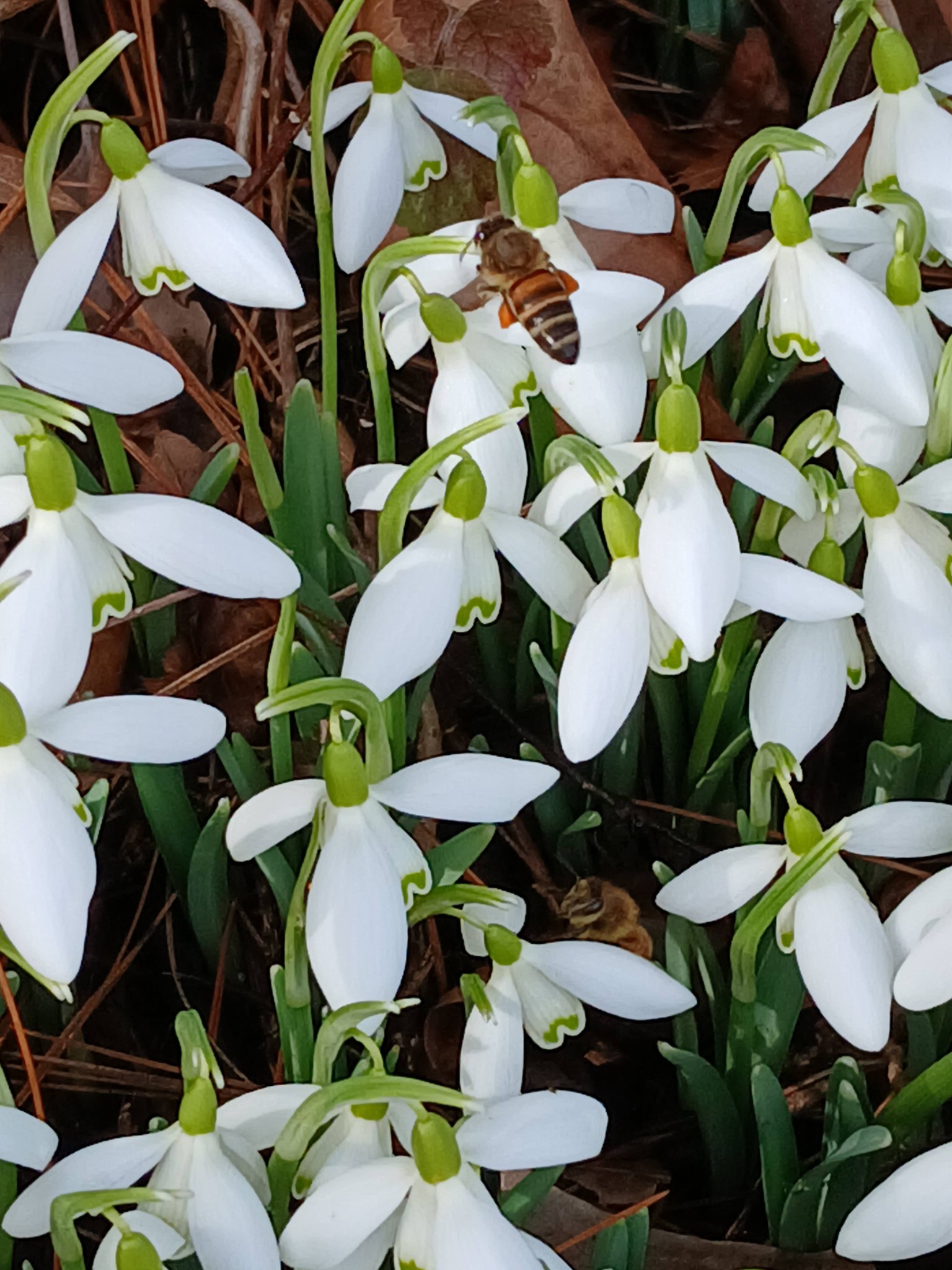
And after days of necessary spring rain, drizzle, and fog, the long-awaited thaw eradicated most of our snow. Crocuses bloomed, and bees came out to visit the snowdrops.
I felt much better today and was able to take a walk in the mild sun, listening to robins, mourning doves, song sparrows, woodpeckers, redwing blackbirds, bluebirds, house finches, Carolina chickadees, American crows, Canada geese, mockingbirds, cardinals, bluejays, masses of starlings…I watched the high-flown antics of redtail hawks and turkey vultures.
In other regions of the world today, people listen and watch for fighter jets, torpedoes, drones. There but for fortune may go you or I (Phil Ochs). Meanwhile I remain grateful for feeling slightly better as the days lengthen into spring. It’s March–we could still get snow! But the spring peepers sense the warmer temperature and trilled a bit last evening while the great horned owl was hooting. Here’s a poem I wrote in 2012 about DST.
~
Daylight Savings Time

In the 21st century it seems
a bootless custom, a cultural exercise,
useless gill of the railroad era.
Yet as I sit on my porch
long past the 6 o’clock hour,
dinner already consumed, dishes cleaned,
feeling the breeze of mild late winter
raise the hairs on my bare arms,
I am glad for the extra hour
among long shadows as my dog
chases a woodchuck, as the wood-
pecker pounds in metrical progressions:
trochee, trochee, spondee.
The path the dog follows
is greener than it was yesterday,
coltsfoot blooming and the scent
of winter-blooming hazel in the air,
available to my senses because
the day’s now one hour further skewed
toward spring, a brief and welcome turn
in the nature of things,
however imposed and arbitrary.
~
~~~
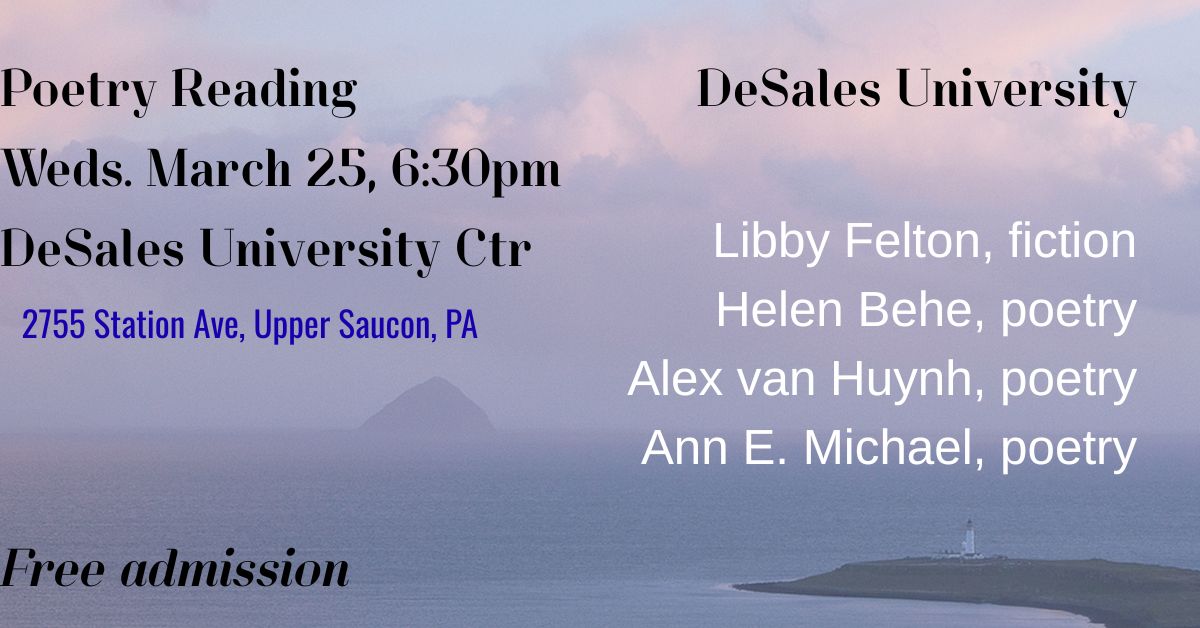
A week before National Poetry Month, I’ll be reading at this event in Center Valley PA.
I keep a day-by-day garden journal, ten years at a time (the one I use is here, from Lee Valley). This record often proves useful and is an interesting way to compare how the seasons unfurl from year to year. After 30 years of record-keeping, for example, I can see that the summers here are hotter and drier than they used to be, and that winters are far less consistent. I note which plants thrive and which fail, and observe when invasive species arrive and when certain plants or animals seem to experience a die-off–or a flourishing. As I used to tell my students in composition and rhetoric classes, basic comparisons are a toe-in-the-water way to begin learning how to do full-fledged analysis. In what ways are things alike? In what ways do they differ?
Let’s look at February, surely my least-favorite month. In 1997, the month was mild, even warm; snowdrops bloomed on the 21st (in 1996, the bloom was the 23rd, in 2000, the 24th). Fast-forward: in 2023, they blossomed on February 13th, in 2024 on February 8th. Similarly for the bloom times of iris reticulata and witchhazel. Last year, however–2025–we had arctic air pushing through due to warming at the poles and other effects. The snowdrops opened late, on February 25th. This year, we’ve had a colder-than-average midwinter. Today, after yet another snowstorm, there’s an additional 5″ of snow cover over existing snow. I doubt I’ll see snowdrops for another week or so. But you never know. Galanthus are resourceful, having originated possibly in the Pyrenees or even Thracia, and they have adapted to many regions quite happily. They can even bloom under a light snow cover.
Comparing seasons from year to year has helped me to plan my garden, but it’s always a bit of a crap shoot. Earth’s varying meteorological systems mean that humans endeavoring to grow crops or plan for weather events will often be surprised. Nature is unpredictable, no matter how many analyses we project. The recent snowstorm here was, if not wildly inaccurately predicted, at least not following the most expected computer models. Which is as it should be. Artificial intelligence and algorithms are far from foolproof.
~~
What will the weather be like on March 7th? I’m planning to attend the book fair day at AWP in Baltimore that day, but always “weather permitting.” Last year in Los Angeles, I liked having the option of just attending one day of the event–sans panels and such, which overload my introvert personality. But Baltimore is a 3-hour drive from here, so weather must permit! The past five years, March 6-8 has been mild and reasonably fair; so says my garden journal, so maybe I will get there. If so, I’ll return bearing poetry collections…
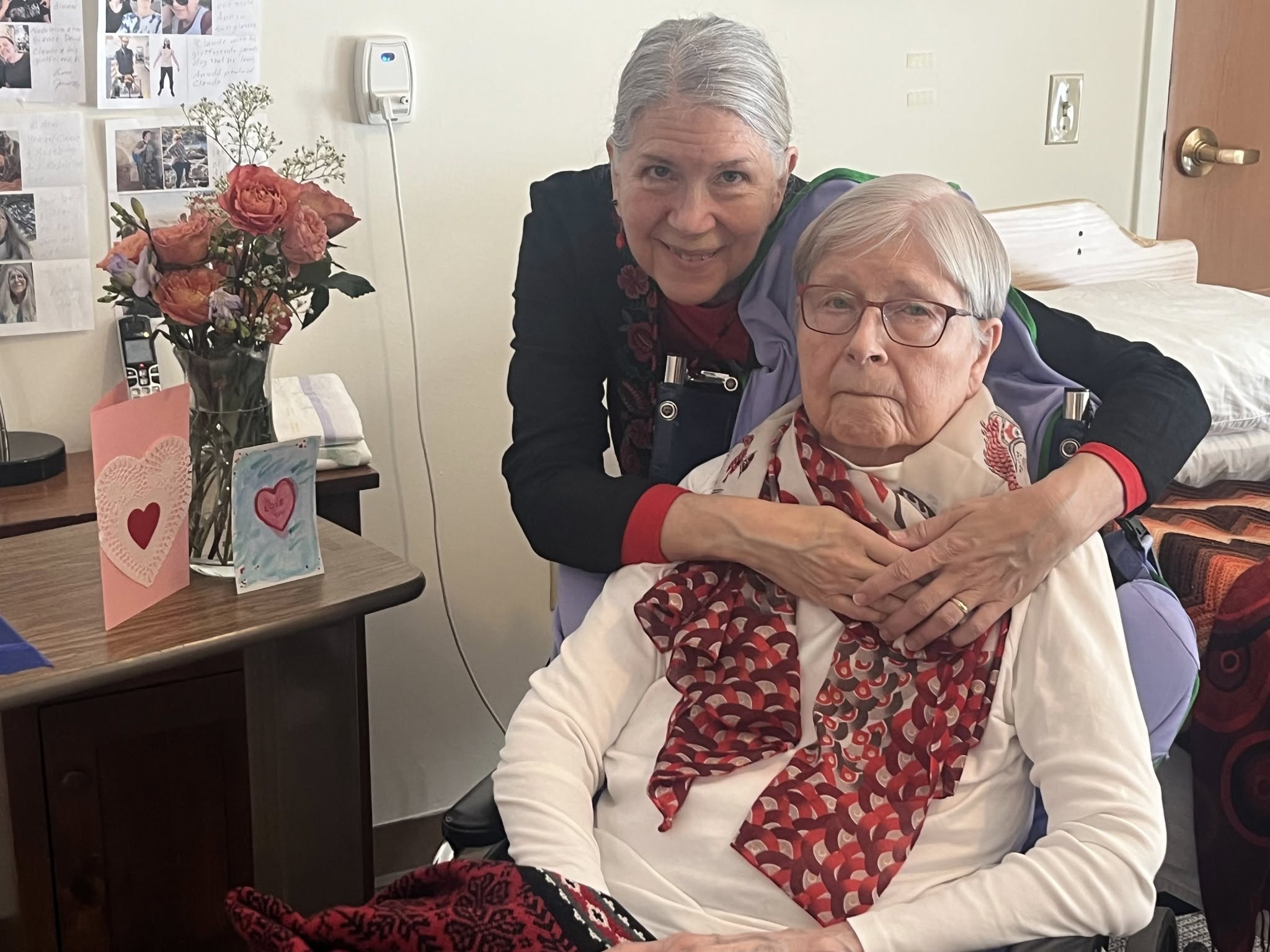
Meantime, my mother will turn 93 this week. I wish celebration were in order, but she seems to be retreating into a zoning world of her own, less familiar to us and less aware of her surroundings. Once again, comparisons: who she was for most of my life and who she is (or is not) now. She’s weathered much in her lifetime. The analysis: I don’t love her any less.
Midwinter thaw. Hints that underneath all the snow, spring awakening could eventually occur; also, a distinct likelihood that once the snow melts, the air will again get frigid because winter’s not over.
Lately, I’m trying to find enough mojo to send out some poems. My thinking is that given current circumstances, having poems in (mostly) online journals offers more possibility that someone, anyone, will read them. Poetry like most arts is communicative, so poets need readers; I treasure my readers, but they are few. I love books, but my books do not sell well. That means the poems don’t reach an audience. This blog doesn’t have a host of regular readers, either, though there are some stalwart followers for whom I am immensely grateful. Then what are a poet’s options? Small-press publication (let’s hear it for those wonderful folks!) and self-publishing can get you the physical book, but for readers you have to do a ton of self-promotion. This is a skill I have never developed and that I do not, at my age, wish to learn. Besides, I am out of the job market now and have no need for a CV full of publication credits.
But I read literary journals. My colleagues in creative writing read literary journals. Some lit journals continue to produce paper issues, bless them, but more of them post poems on various social media platforms, where casual viewers might run across a poem and–who knows?–read it! Therefore, it seems to me that’s what I ought to be doing: getting my work in magazines, large and small, local and international, professional and amateur, one poem at a time as a kind and careful editor decides my poem suits the journal. I think that in 2026, more poems reach people online than in books. Am I wrong about that? I guess I could research that question if I really want to know.
Of course I love books and will never stop reading them, poetry books and other kinds. Of course I would be thrilled to have another book in print if the manuscripts I send out ever were to find homes. However, probably my focus this year will be on the more ephemeral but wider-reaching media forms. I want to remind myself that I write because what I want to say may be valuable to someone other than myself; might strike someone as beautiful, sad, or wise; might make someone think in a different way or learn something new. Poetry has always done that for me, after all.
Well, I have been writing. But less about the current wintry days than I expected, because of the online poetry seminar I’m taking.
One recent prompt in Anita Skeen‘s workshop involves employing phrases from a text and using those words, or images, as a start to a poem that would not encompass or even relate to the original topic. I’ve written work that does that; but more commonly I continue the topic in some way, most notably with my long-poem/chapbook manuscript The Librarian of Pyok Dong. And what I notice is that I tend to choose “unlovely” texts, articles or essays that are historical, scientific, or academic, rather than to use the words of poets or novelists. Why that is, I can’t say for sure; it may simply be due to my deep-rooted nerdiness. But I think of poets like Martha Silano, Rebecca Elson, Muriel Ruykeyser, and others who have created amazing work, beautiful poems, from newspaper articles, scientific papers, academic texts, encyclopedias–so I feel encouraged. The result, for me, however, is often an unlovely draft.
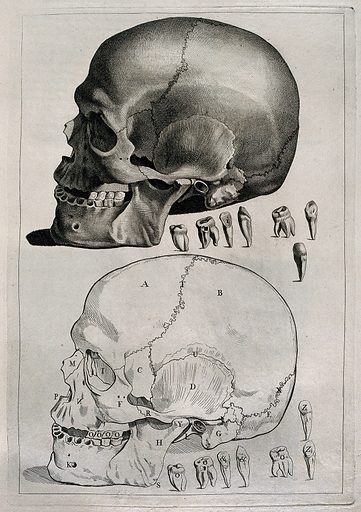
Etching by or after J. Gamelin, 1778/1779. Created 1779. Contributors: Jacques Gamelin. Work ID: h3ybfzwe.
I have recently spent some time proofreading one of my brother’s papers that addresses the origins of some of the crania in Samuel George Morton’s collection, which resides at the Penn Museum in Philadelphia and is among the controversial holdings there of sacred/religious objects and human remains. The University has committed to “repatriating” such items in its collections that belong to indigenous peoples, for example, and to returning human bones to places of origin or to “respectful interment.” The challenge with Morton’s large collection is to ascertain where, in fact, these human beings came from. [Informational page is here.] My brother has been trying to track down the people, likely young Africans, who made up one set of about 55 skulls collected in Cuba around 1839-1840.
It’s a terrible history, of course. The Middle Passage, slavery, illness, misery, abandonment even in death. And it’s an academic paper, so the language–not to dismiss the author’s writing ability, since he’s keeping to the conventional style–does not lend itself to poetry.
Basically, I’ve given myself a difficult task. Yet we learn through difficulty, do we not? Often, too, the unlovely poems are those that deal with how rotten human beings can be, or illuminate the worst of times and offer us insight and information that we had not been taught, hidden horrors, trauma, all of the above. I have written many lovely poems about lovely things. The world, however, manages to be far more complicated than beautiful, a mixed bag of joys and miseries, and it seems to me that literature and art ought to reflect that fact sometimes.
What I’m posting below is a very rough draft, just to demonstrate how I begin a difficult poem, a poem based upon historical facts that I’m learning myself. It’s a completely different process from when I write from an image or observation of my own. For example, the “Librarian” poem, which is about 15 pages long, took me a couple of years and a visit to the United States Army Heritage and Education Center (USAHEC) at Carlisle Barracks, PA! First I pull some quotes, make a lot of notes, highlight images or place names that seem most resonant. Then I develop these into what I call “jottings” and fragments, and start setting them into an initial sequence–which I often change later.
Stanzas? Line breaks? Metaphors? Meter? All of that can wait; I like to work on structuring the narrative first when I try something in this vein, and I want to find images that might speak to a reader. So it is clear to me that this poem is not one I’ll have finished before the end of the 5-meetings-long workshop. Assuming I ever do finish it. Yes, poetry is hard work.
~
José Rodríguez y Cisneros, Havana Physician, Ships 55 Human Crania to Samuel George Morton, Anatomist (1840)
A Cuban journalist writes that by 1915 “The Vedado of my childhood was a sea rock over which the seagulls flew”
sandy, overgrown with Caleta sea grapes the nesting-place of rats, iguanas
but once a cemetery for paupers and bozales, the unbaptized, slaves, the suicides
abandoned on this coast as carrion
where turkey vultures and wild dogs fed on corpses hastily interred
“el Pudridero” they called it— the rotting place— local people thought it cursed
for a more scientific-minded man, opportunity to harvest skulls for anatomic pursuits. Nameless, blameless nobodies
who were otherwise less than worthless:
the definition from a 19th century Spanish dictionary:
“bozales. A Negro recently removed from his [native] country— metaphorical and vernacular, one who is foolish or idiotic…
can be applied to wild horses.”
~~
*note~
“the Vedado Interment Site…originated as a sinkhole that came to be utilized as a mass grave…[the majority] of the Vedado Group likely consisted of enslaved people born in Africa during the early 19th century, most of whom died of infectious diseases soon after arriving in Cuba.” —John S. Michael
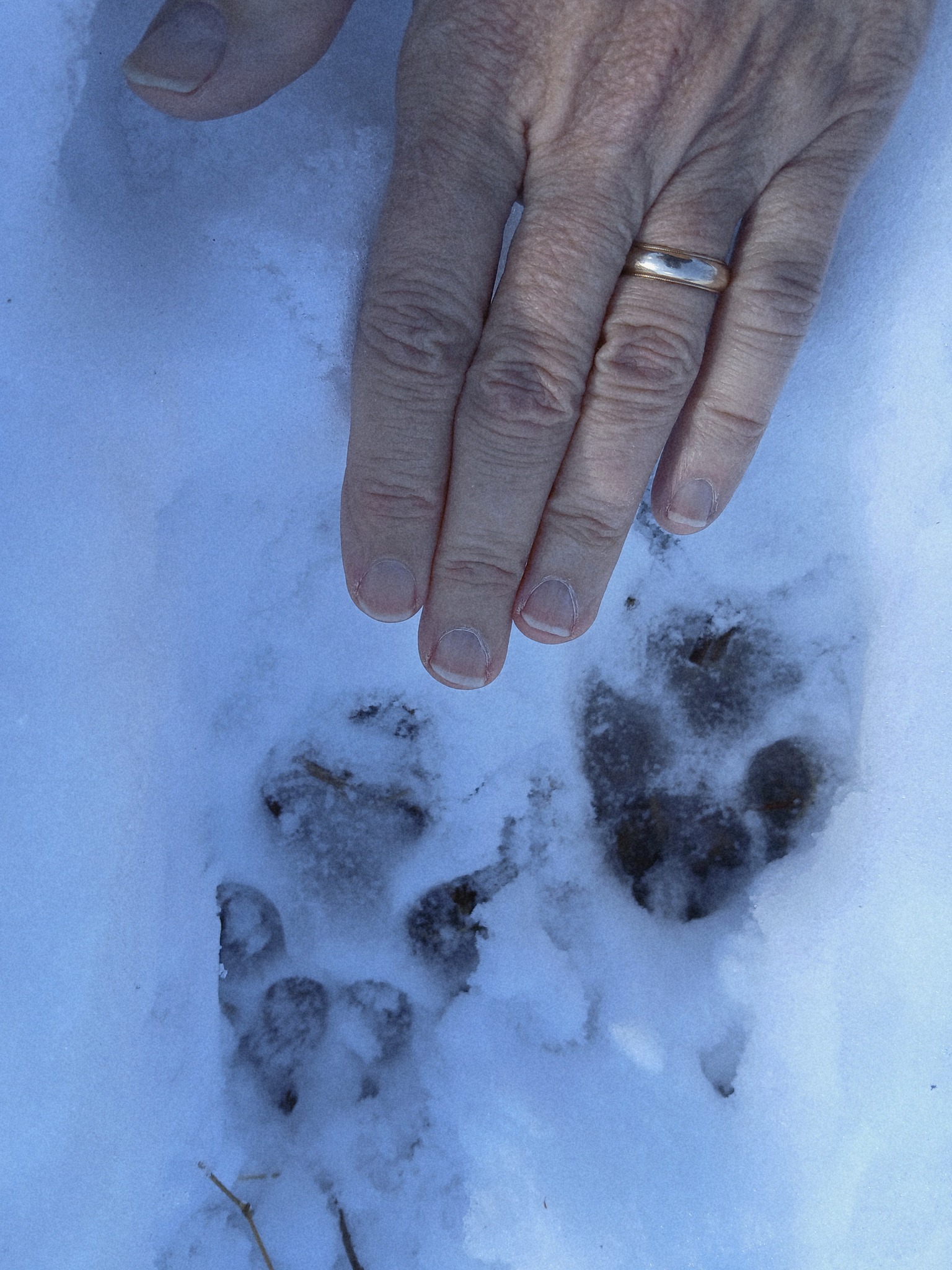
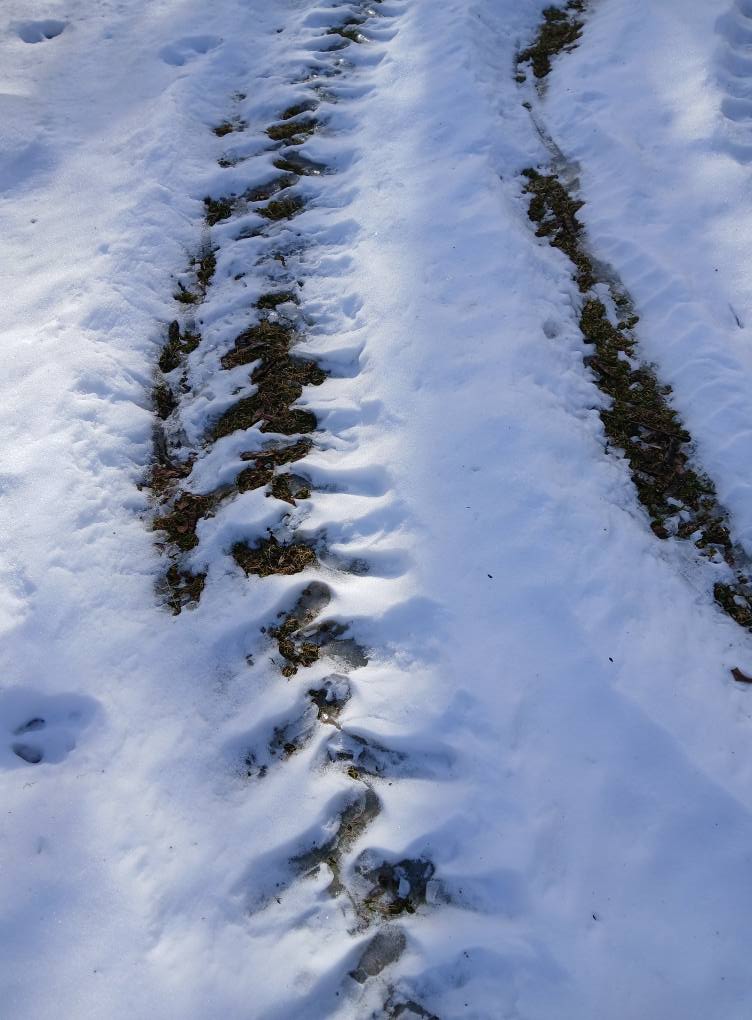
The other day, we noticed a coyote limping down the meadow. We hear them now and then, at night, but we seldom see them; and this one was out at noontime. A bit unusual. I felt concerned about it as it moved off into the undergrowth at the field’s edge.
Out of curiosity, I guess, the next day I traced its tracks from the treeline between our property and the next one, down through our meadow, into the woods beyond our lot. Mind you, I am not an animal tracker. Furthermore, our snow is absolutely criss-crossed by tracks: deer, rabbits, humans, birds, squirrels, cats, and the occasional owl-hit. It took a little looking to determine which tracks had been left by the coyote, but I had seen it taking the deer path through the dead weeds, so I started there. It wasn’t really too difficult to determine, despite paw prints from all those other critters. The prints resemble dogs’ tracks; and there aren’t spots, like those you see with a fox, where the animal suddenly prinks, leaps, or lunges its nose and forepaws into the snow while chasing field voles. Also? The prints were too big to be a red fox.
An aside–I recently read Catherine Raven’s memoir-ish book Fox and I, which I liked very much and from which I learned a more than a few fox-related pieces of information. And some descriptions of winter in Montana, which is too much winter for me, especially after this latest snowfall in Pennsylvania. But anyway—
The average cat weighs 10-12 pounds, the average red fox 30-ish pounds, and eastern coyotes in our region can be 45-55 pounds. This one was, I think, a male because it left quite heavy tracks, though possibly it was putting more weight on three legs because the front right paw was injured badly enough it never set that paw down. I recall once when our family dog got caught in a neighbor’s “soft-paw” fox trap. As soon as I got her loose, she ran for the house, and I noticed her prints in the snow–three heavy prints and a lighter one since she was favoring one foot. This coyote wasn’t using its leg at all. In a few places I could see a swash on the snow surface where the snow was deep enough that the coyote’s foot had skimmed it. The circuit led into the woods and I pressed no further.
That’s about the extent of my animal-tracking knowledge. It was, however, an interesting departure from my usual winter walk, and a nice day for walking. Everyone else in the county was out buying gasoline and groceries because a big storm was in the forecast for the weekend. Which did arrive (the storm, I mean. Well, also the weekend.).
I’ve been working on new poem drafts lately, after weeks of barely any new writing, focusing on revision instead. What do you bet that coyote, or its tracks, or at very least, the snow, will show up in at least one new draft?
~
FYI: Here’s another set of tracks commonly seen at my house in winter:
I have been missing my dad, so today I put on his old cotton knit sweater, the one that’s developing holes in the weave, the one I kept because his scent lingered in its fibers. It’s been over five years since his death and, alas, that familiar scent has finally vanished from the sweater. Though I like to think that it has been absorbed into the other items in my closet, maybe the hoodie my daughter knitted, maybe the flannel pjs, maybe the four old pairs of jeans I wear continually or the one full-length gown I’ve seldom donned but have kept for reasons not entirely rational. I’m hoping my dad has somehow permeated my closet, the things I wear next to my skin, my life.
And I came across this poem recently in Gary Whited’s Having Listened. Indeed, it resonates in the way a poem can, a sort of slanted parallel of feeling, affinity, relationship. I love the idea of “shirt knowledge,” the thought that inanimate objects might “know” in ways humans cannot perceive. Those last lines: “how to be private and patient,/how to be unbuttoned,/how to carry the scent of what has worn me,/and to know myself by the wrinkles” seem accurate to my current state. Comfortable, comforting.
Like an old shirt. Like a good poem. Like a memory of my dad.
~
My Blue Shirt
hangs in the closet of this small room, collar open, sleeves empty, tail wrinkled. Nothing fills the shirt but air and my faint scent. It waits, all seven buttons undone, button holes slack, the soft fabric with its square white pattern, all of it waiting for a body. It would take any body, though it knows, in its shirt way of knowing, only mine has my shape in its wrinkles, my bend in the elbows. Outside this room birds hunt for food, young leaves drink in morning sunlight, people pass on their way to breakfast. Yet here, in this closet, the blue shirt needs nothing, expects nothing, knows only its shirt knowledge, that I am now learning—how to be private and patient, how to be unbuttoned, how to carry the scent of what has worn me, and to know myself by the wrinkles.
We got some rain on Saturday, which we’ve needed, and dismal cold rainy January days are perfect for settling down with a book. I’m reading The Unsettling of America, Culture & Agriculture (1977) by poet, writer, farmer, educator, activist Wendell Berry, still working at 91–his book Sabbath Poems was published in 2024. I’m much more familiar with Berry’s poetry than his prose, though he’s written at least half a dozen novels and many books of nonfiction. This text, I’ve since learned, is one of his more famous–it’s been revised and re-issued six times. The copy I got from the library is the original version and features cover blurbs by Gary Snyder, Wallace Stegner, Edward Abbey, and Stewart Brand, among others; Publishers Weekly summed up the book as “a cool, reasoned, lucid and at times poetic explanation of what agribusiness and the mechanization of farming are doing to the American fabric.”
Which is a fairly good one-sentence précis, though Berry’s wording often strikes me as more passionate than “cool,” and agribusiness is only one aspect of his critique. I was in high school in the 1970s, and at the time it seemed average Americans were beginning to recognize that pollution and overpopulation could be problematic, that maybe we needed to eat more natural and wholesome foods, and that establishing an Earth Day might help people turn focus toward the planet. Simultaneously, we had Earl Butz as Agriculture Secretary, a man who ended many New Deal programs to help “small” farmers and who encouraged large (eventually, corporate) farms. Butz appears several times in this book, and no wonder; he and Berry debated the topic in public and in print, and their thinking was almost diametrically opposed concerning the philosophy behind agriculture. Berry’s book is a social and philosophical argument that is only somewhat dated and really quite prescient, though he might come off as mildly curmudgeonly to today’s readers. Or maybe not so prescient. He was simply paying attention.
The sections of the book that most resonate with me are those in which he writes of nurturing and relationships, and points out that good relationships involve responsible actions and collaborative, mutual care whether they are marital, family, or social relationships or relationships with the soil, the flora and fauna, the whole planet. He predicts a future in which people live in their houses and not with the land, or even within their communities, and where wilderness is “conserved” so that it can be exploited for entertainment and scenic views. People in the US, he says, don’t feel responsible for the land on which they live; they don’t understand its cycles, its weather patterns, its waterways; their property is merely property–a commodity for convenience and investment. I’d say that future is already upon us.
Thus, Berry has made me think more deeply about my relationship with “my” property. If you’ve read this blog for awhile, you may notice how often I consider weather, dirt, local animals, insects (especially invasive or non-native ones), plants, tree diseases, water–I’m no farmer, but I am a gardener and do feed myself at least partly from my own backyard. I take almost daily walks around the perimeter of our 6+ acres, poking around in the hedgerows, scanning the sky, looking down at walnuts and animal scat, watching for new buds or coloring leaves or bird nests or wildflowers. I worry over droughts and hailstorms and flooding. Climate change concerns me in very local and specific ways, not just in general.
One could say I’m at least trying to nurture the earth. I’ve made many mistakes along the way and done some damage that I’m learning how to rectify; I have also realized that I have to accept some changes, such as incursions by invasive species, because they are beyond my control. Through the almost 30 years we’ve lived on this land, I’ve tried to understand it better. After all, we built a house on it. The soil was hard-packed, acidic, overused from previous decades of corn-growing, full of stones, sumac, and asiatic rose bushes, a fallow field that hadn’t been planted or farmed in decades but didn’t necessarily need me to tend it. It wasn’t my family’s land, and I didn’t intend to end my days here; however, I figured if I was going to live on this spot, I had better do whatever tending and nurturing it might require.
Which is about the best I can do as far as a relationship with the land in which I dwell, and about the best any of us can do in any long-term relationship: try to understand it, get acquainted, do some research, make plenty of observations (maybe take notes), and nurture what seems to need special attention and care. The land has given me much more than I’ve ever given it. It’s offered shelter, beauty, an education, food, the companionship of animal life, cricket sounds, tree frog songs, firefly lights on long summer nights, open spaces for my children to play in, owl calls and fox kenning, the grace of leaping whitetails, dead-fall wood we can burn in winter, forest-bathing, hammock-swaying, inspiration for writing. The wonderful porch here, where I often sit to write in my journal, opens a view to the meadow out back. So many poems started on that porch, with that view…
That’s how the earth nurtures me. May I be somehow worthy of it.
Another day. One that the calendar claims occurs in 2026, although at times I disregard the calendar–another human-made thing, and I find so many human-made things destructive and frustrating. It’s not as though a “new” year puts away what has happened the previous 365 days the way I can put away the holiday decor. Which I haven’t actually done as yet. Anyway, we’re still in the first week of January, and Twelfth Night has barely arrived, so if I do want to acknowledge the calendar I can excuse my lack of clearing-away. But I can’t clear away the losses of the past year, and I don’t want to. I want to remember my friends for as long as I can.
It’s true that wintry walks offer quiet splendor (sometimes) and a chance to reflect, but mostly winter affords the chance to stay inside, curled up with a book or browsing through garden catalogs. Theoretically, it’s a good time to revise and submit my work; often, however, I don’t get to that process because winter is also a low-energy time for me. I powered through a fibromyalgia flare two days after New Year’s Eve because loved ones were visiting, but there’s a bit of fallout as a result–worth it, though; and I’m chuffed about taking poetry workshops later in the month. Meanwhile, reading books! I got a Samuel Hazo collection from my local library, I’m reading Wendell Berry and Richard McCann, and Ada Limón’s You Are Here is on my to-read pile. I’ve also felt inspired by the start-of-a-new-year blog posts Dave Bonta has curated on his Poetry Blog Digest. Many writers and books there I want to check out, and many writers and poets feeling some of the same things I’ve been feeling about the past year and what to make of the years ahead.
So to recharge, as it were, I’ll do small, refreshing things this January: take photos, doodle with watercolors, read books, tromp about in boots, meet pals for morning coffee, draft poems, play with images, as per Johan Huizinga–“To call poetry, as Paul Valery has done, a playing with words and language is no metaphor: it is the precise and literal truth…What poetic language does with images is to play with them.”



 ann e michael